Skill Level: Intermediate to Advanced

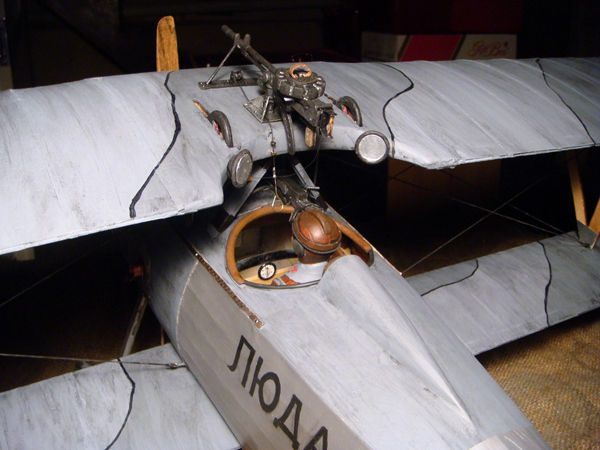


Prototype version does not include instruction manual

FEATURES
- One piece construction with scale fuselage and tail shapes
- Top and bottom wing alignment is built into design
- Scale dihedral, includes in wing aileron servos
- Scale fuselage built from formers and stringers
- Front of the fuselage is balsa box, the rear is built up with top and bottom formers, stringers
- Built up cowl
- Scale number of ribs and subribs
- 1/32" plywood trailing edges included
- Carbon tube leading edges and 1/8" diameter carbon rod spars in scale location
- Under cambered airfoil
- Dummy bell crank mechanically operated by in wing servos ( Optional feature)
- Dummy motor with electric motor mount
The Nieuport series fighters became a serious factor in aerial combat with the introduction of Gustave Delage's Nieuport 11. The small lightweight aircraft countered the Fokker Eindecker's forward firing fuselage mounted machine gun with superior agility. In an attempt to increase speed, the airframe was fitted with a larger 110 HP Le Rhone replacing the old 80 HP Le Rhone. The new configuration was designated the Nieuport 16 . The N16 did not fair well as the airframe was not up to the demands of the larger power plant. Delage went back to the drawing board and increased the wing span and wing area as well as adding other improvements. The new design was designated the Nieuport 17 and it was a smashing success. The type was made in large numbers by several French manufacturers and was licensed to Italian and Russian manufacturers. It was in service with the French, British, Belgian and Russian air forces.
One of the distinguishing characteristics of the Nieuport 17 that is not often modeled is the tapered fuselage from top to bottom. Most models have simple vertical sides. I found out why they do this in my design process. It is a complex matter to get that taper and it took me many hours before I was satisfied with the fuselage.
The
17bis variant featured a symmetrical streamlined fuselage and a more powerful
Clerget rotary engine.