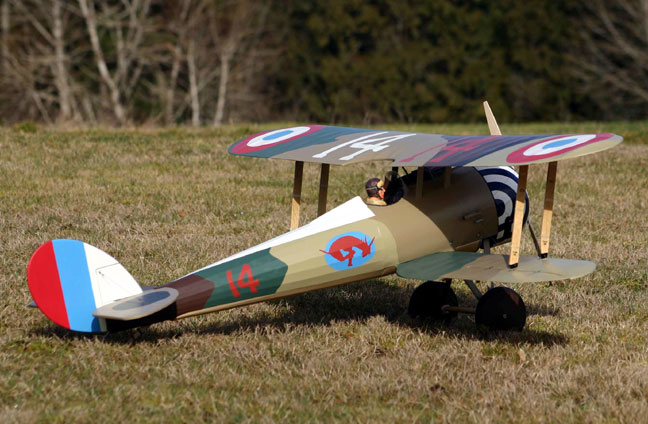
Nieuport 28 53"
Short Kit & Plans: $255 0Buy It
Plans: $300Buy It

Skill Level: Advanced

More than 480 laser cut parts

Nieuport 28 53"

SPECIFICATIONS
Scale: 1/6
Prop: 12x8 or 14x8
Channels: R/E/A/T
Wheels: uses 4.5" diameter balsa and ply wheels whith neoprene cord tires. Our large spoke wheel kit will also fit.
Wingspan: 53"
Airfoil Type: flat bottomed
Wing Area: 712 sq in
Cowl: Balsa and ply with laser cut jig for ease in assembly
Designer: M.K. Bengtson
Weight: ~75 oz
jSpinner: N/A

Prototype Builder: Gary Ritchie

Power System: Dummy motor as AXI 2826 Brushless Out Runner Motor Mount
Shipping Weight: 6 pounds
Nieuport 28 By Gary Ritchie

Instruction Manual

Get Adobe Reader FREE

FEATURES

        • Tail surfaces are built with balsa and sheeted with 1/32" balsa in scale fashion
        • Removable wings
        • Carbon rod spars in scale locations
        • Scale number of ribs
        • Flat bottomed airfoil 1/32" ply scalloped leading edges, ply scale rlib cap strips, ply trailing edge. This makes wings look very scale in appearance.
        • Laminated ply IP struts included
        • Fuselage was designed along scale internal construction including a cabane strut that connects to the lower wing attachment at spars.
        • Belly of the fuselage between wings is removable for electronics and power system access.


HISTORICAL SIGNIFICANCE

The Nieuport series of sesquiplane fighters had been superseded in French service by the SPAD series of fighters. Attempts to enhance the Nieuport designs by redesigning the airframe, fitting more powerful engines, or even changing to a new wing had proved unsuccessful and the SPAD firm's dominance had continued unabated. It was inevitable, then, that the Nieuport firm would at last switch to a conventional biplane with parallel interplane struts. The major deficiency of the sesquiplanes had been low speed and poor climbing ability. An increase in wing area and a more powerful engine was required to correct these defects. Furthermore, shortcomings in the design of the lower wing had resulted in those of the Nieuport 23 ripping off in flight. There was still a pressing need for new fighters and the SPAD firm was having difficulties meeting its production goals for the SPAD 13. The entry of the Americans into the conflict meant they would need new aircraft. The French wished to retain the SPAD 13s for their own escadrilles, so it was decided that the Nieuport firm would produce the Nieuport 28 for use by the American air service. The A.E.F. Air Service ordered a total of 297. Described by many as the most elegant fighter plane of the First World War, she typifies fast scouting aircraft. Although by no means the most successful type of the conflict, the Nieuport 28 fully deserves its place in aviation history